Dark Ecologies: Race & the Environment

Image: Faya Dayi, 2021, Jessica Beshir (Ethiopia)
Offered: Spring 2025 | Fall 2026
Level: graduate
“Dark ecologies” name a range of historically maligned environments, associated with ideas of darkness, unruliness, danger or disease, such as swamps, forests, polluted fields, bushes, urban ghettos etc. These diverse environments targeted by ruling classes for removal, destruction or neglect, also function as sites of refuge, life-making, and subjugated ecological knowledges. Placing in critical conversation film studies and geography, this multidisciplinary course provides an overview of recent scholarship on race and the environment in geography, paired with cinematic engagements with dark ecologies. Students will interrogate the fraught relationship between race, visuality, spectatorship and ecology, focusing on environments that resist legibility and visibility.
Level: undergraduate
Offered: Winter 2025
Urban Symphonies:
Geography of Cities
Carceral Geographies
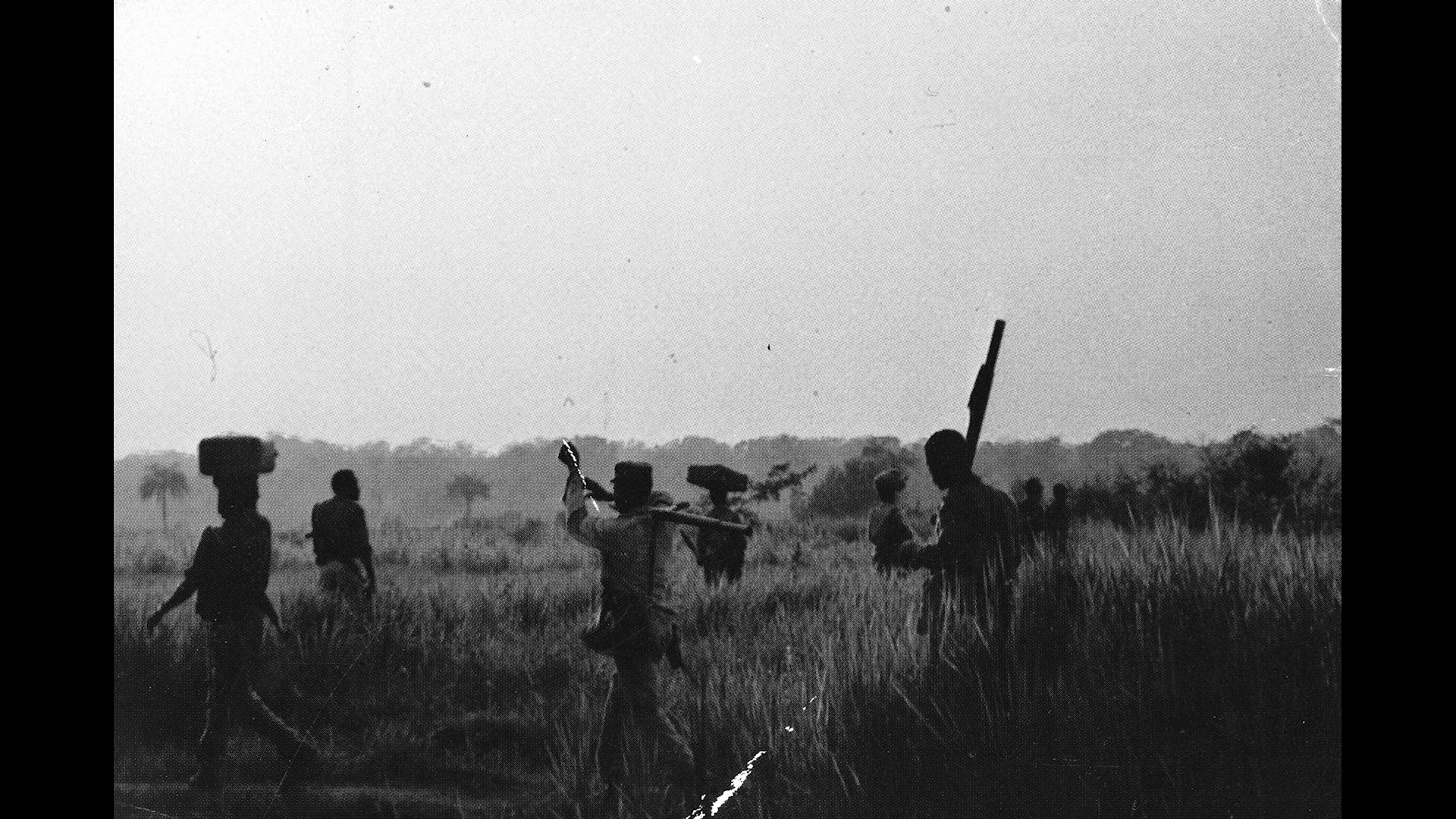
Image: Foreword to Guns for Banta, 2011, Mathieu Kleyebe Abonnenc (France)
Offered: Winter 2026
Level: graduate
This multidisciplinary course places in critical conversation film studies, literature and geography, to explore engagements with the prison as physical landscape and social relation, within global geographies of imperial warfare and abolition. Mobilizing films, prison memoirs and conceptual works primarily, we will examine carcerality, and the unlivable geographies it proliferates, in expansive ways—from the plantation to prisons, police stations, detention centers, military barracks, neoliberal streets, suburban houses, economic zones of exception, and psych wards.
Level: higher undergraduate (juniors, seniors)
Offered: Spring 2025 | Spring 2026 | Fall 2026
A critical introduction to a range of creative qualitative research methodologies, grounded in Black, feminist and Indigenous studies. The course will be organized around modules (e.g. observation and fieldnotes; interviews; sonic ethnography; mapping; collage; archival analysis; visual analysis…). Class will consist of a combination of lectures, seminar-style discussions and workshops. Students will learn to collect, analyze and interpret qualitative data, focusing on what these methodologies offer to a geographic understanding of social, cultural and environmental phenomena.
Qualitative Methods
Nocturnal Geographies
Offered: TBA